

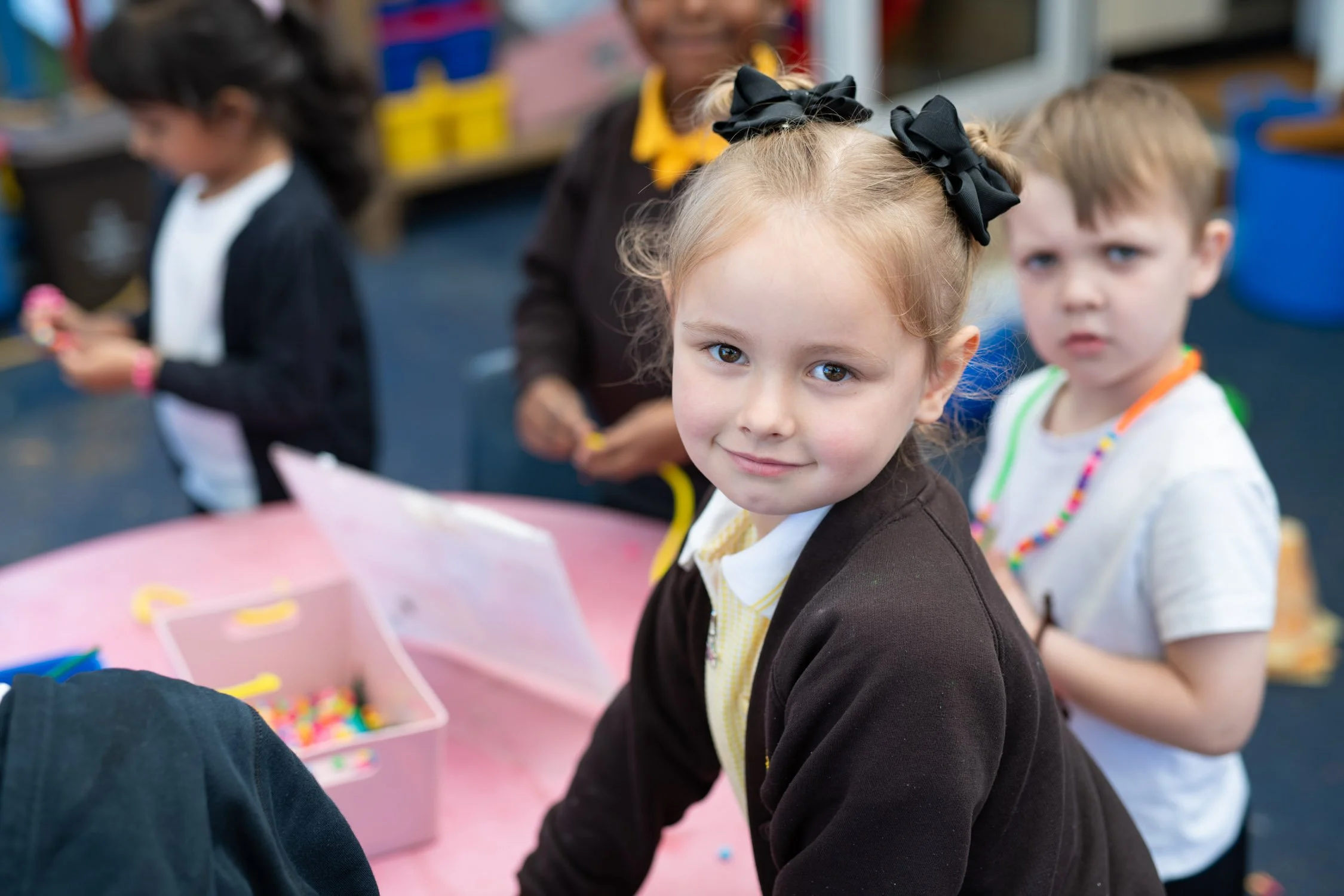
Early Years Foundation Stage (EYFS)
Learning in Reception
In Reception class we start the year getting to know each other and settling into school life and routines. We do our Baseline assessment too.
Then we begin learning phonics, reading, writing maths and other subject areas which are given in more detail below.
Phonics:
We have 2 phonics sessions each day. During the first we introduce the sound we will be learning. We sing songs and do actions to help children remember and have a way to recall sounds. We watch short phonics videos.
In the second session we use whiteboards to have a go at listening to sounds and writing words.
We start with Little Wandle phase 2 in the Autumn term, moving onto Phase 3 after the Christmas holiday.
English:
We focus on literacy development and we work with The Literacy Curriculum scheme with some small changes of text to better suit our Reception planning.
Each half term we have 3 texts. Children work as a class and in small groups with an adult with learning objectives directly from the scheme.
Writing and other learning opportunities are included around the classroom. This is always in the writing area, but also small work, water tray, role play etc.
Maths:
In Maths we follow the Maths Mastery scheme of work. Below is the list of units we cover in Reception. This scheme has lots of practical activities and models the language we know is so important for children to learn and understand these areas of learning.
We have daily maths carpet sessions, adult focus activities and a dedicated Maths Area of learning in class.
The Maths area enables children to work independently to reinforce their learning, children have access to resources and there is a Talking Peg that explains the activity.
Examples of Maths Mastery lessons can be seen at Oak Academy by following this link: https://classroom.thenational.academy/subjects-by-key-stage/early-years-foundation-stage/subjects/maths
Understanding the World
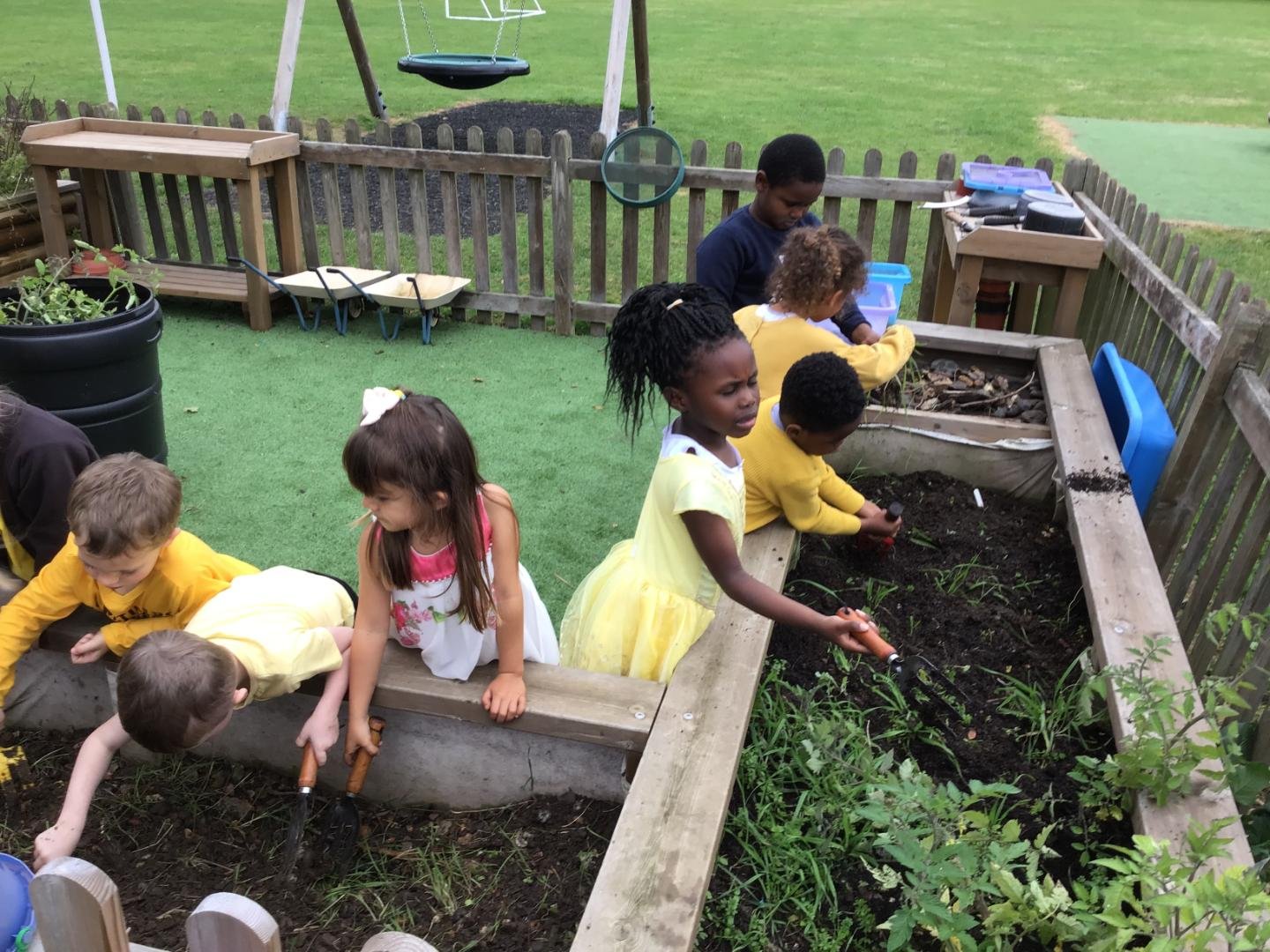
This learning area encourages us to investigate the outdoor environment and notice how it changes over time. We go outside with tools like binoculars and magnifiers to observe and record our findings. We also reflect on families—what they are like and how our own family might differ from others. We share and listen to family experiences and use information books and maps to learn more about the world.
EAD - Expressive Arts and Design
We provide many activities for children to explore and express their creativity.
Indoors:
A paper table where children select materials independently or follow a guided activity.
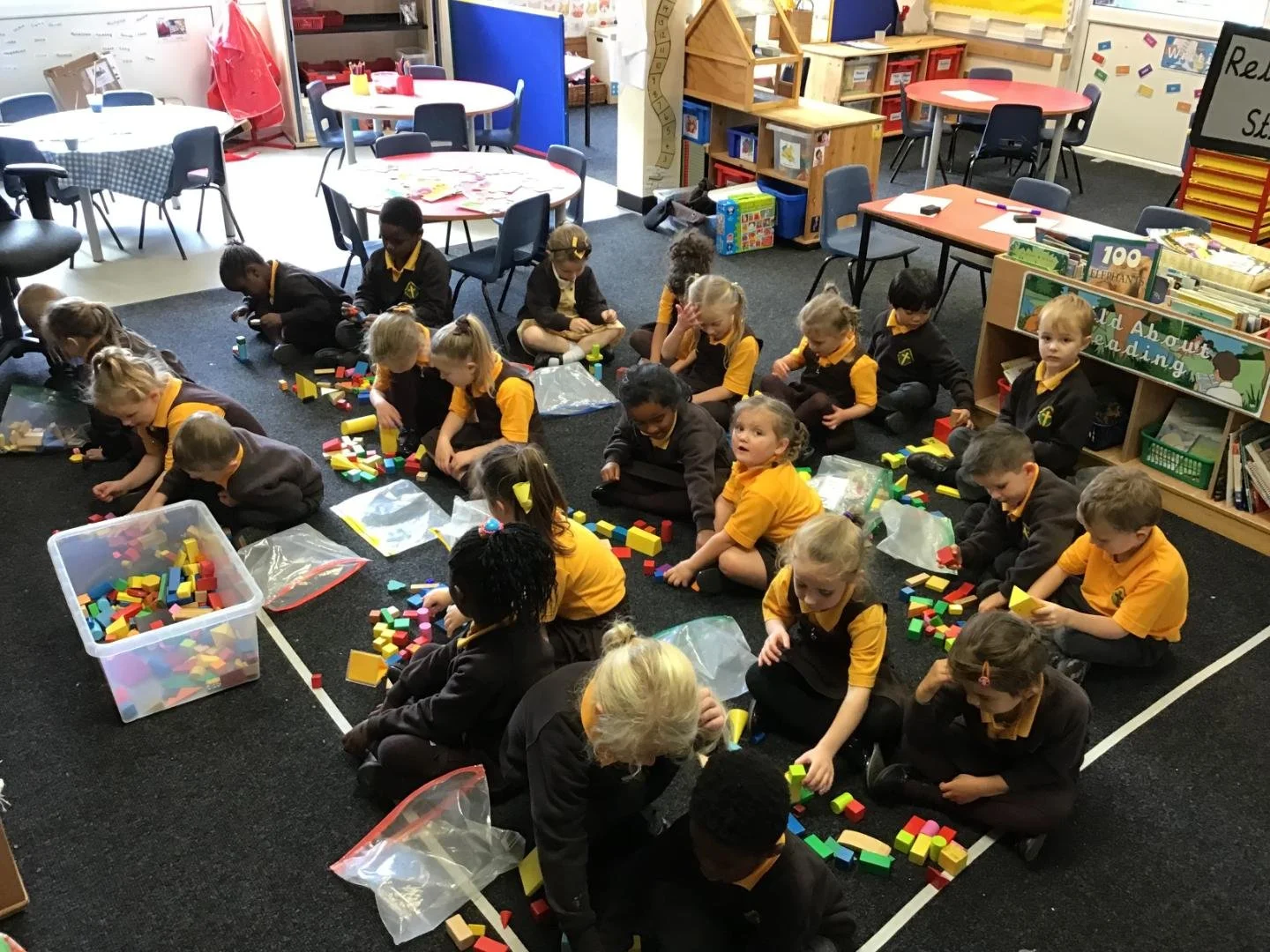
A carpet area for a range of construction games.
A painting table offering varied experiences such as painting on paper, printing, messy play in a tough spot, and sensory activities with flour or sand to develop fine motor skills and drawing.
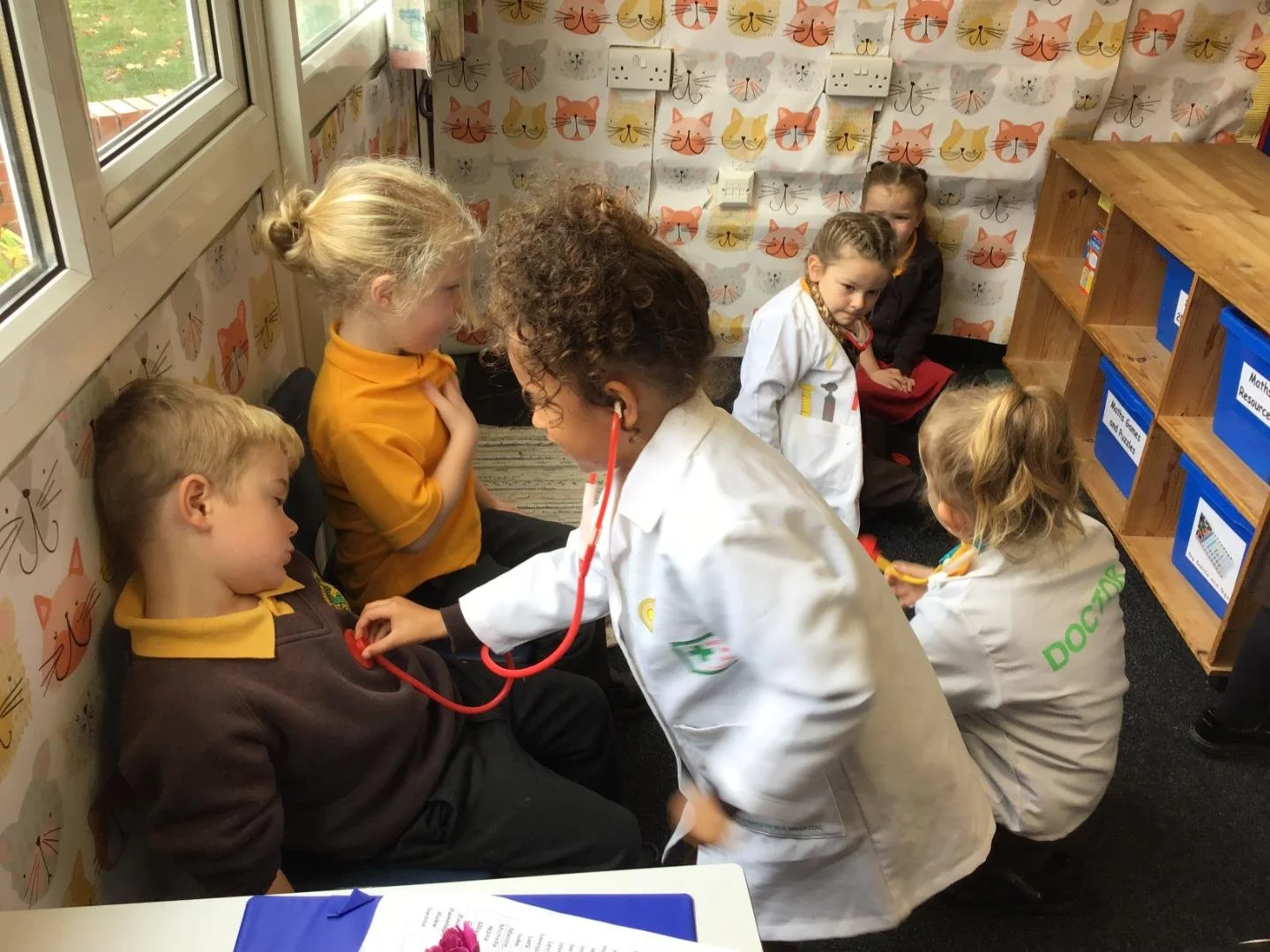
A role-play area and small-world play resources.
Outdoors (Reception Garden):
An easel for painting.
Large construction equipment.
Opportunities to draw on paper or chalkboards.
A home corner and small-world play areas for imaginative role play.
Physical Development
In Reception we provide many activities that develop children’s fine motor skills. These skills support early writing and practical tasks such as managing buttons, turning clothes the right way, and changing back into their uniform for PE.
We follow the Val Sabin scheme of work for our PE lessons.
Autumn Term - Dance, Spring Term - Gym, Summer Term - Games
We also make good use of the amazing facilities we have with the school field for running and games and activities on the artificial pitch.
Personal, Social and Emotional Development (PSED)
Coming to school and learning to work with others can be a big change for lots of children, especially post COVID.
Adults model appropriate behaviour in class and we regularly have circle time and discuss things through social stories. This is a visual and easy way to show children appropriate behaviour in school, what happened in certain situations or interactions and that there are consequences for making bad decisions.
We learn to recognise our own feelings and those of others, and understand how our actions impact people around us. We consider the reasons for rules and collaborate to ensure everyone in the class feels safe and supported. Children take part in many activities that let them explore these ideas.